
The ChinaTalk team is going to CoRL (the Conference on Robot Learning) in Austin! Reply to this email if you’d like to hang out between November 9th and 12th. We’re also doing karaoke on the 11th — RSVP here if you’d like to join!
Ukraine and Russia have rebuilt their armies around drones, deception, and long-range strike. What should the U.S. military take from it? Michael Kofman joins WarTalk regulars Jordan Schneider, Justin McIntosh, and Tony Stark.
We discuss:
How the Starshield throttle grounded Ukraine’s mid-strike drones and jet-powered interceptors, and why no one, Ukrainians included, knows what Washington wants in exchange.
How much leverage the U.S. still has over the war, and why Europe can’t replace America’s role in NATO.
Why buying drones means nothing without drone platoons and companies to fight with them.
Why no one owns the night anymore, and why the U.S. military has no culture of decoys.
The difference between a lesson and an observation, and why wet-gap crossings are harder than Twitter thinks.
What Congress should push on: force design, airbase hardening, and hard questions about how the U.S. plans to fight.
Plus: the perks of being a military analyst and Oregon Trail merch.
Starshield Gets Throttled
Jordan Schneider: Michael Kofman, the leading analyst of his generation, has taught me more about this war over the past four years than anyone else. Reading Mike’s tweets and articles, and listening to his podcast The Russia Contingency, honestly got me into this field.
Today we’ll cover recent developments in Ukraine, starting with the Starlink–Starshield drama and Operation Vivaldi, then broaden out to lessons from the war — and some meta-discussion about the discussion of lessons. We won’t stay at the 101 level.
Justin McIntosh: One thing before we get serious — Mike, is that Jean-Luc Picard on your wall? Well done.
Michael Kofman: It is. It’s a very serious painting of him in the garb of a Napoleonic-era officer. I put it up during COVID, when we were all stuck at home taking meetings in front of a blank blue wall. Since then it’s been a lot of fun. When people see me on PBS, I get messages from random couples saying, “My wife and I have been arguing — is that Patrick Stewart?” Those are my favorite emails to reply to.

Jordan, I’m sorry if I got you into the field. I’ll tell you something you’ve probably already figured out: ain’t no one gotten rich by becoming a military analyst. You’ve never heard somebody say, “That’s it, I’m cashing in. I’m gonna go make money, I’m gonna do military analysis.” So good luck.
Jordan Schneider: It’s all about the friends we make along the way.
Justin McIntosh: We didn’t start WarTalk to make money.
Justin McIntosh: That’s a good kickoff for the news of the last week and a half. Someone in the United States — blame has fallen on both the administration and Elon Musk, increasingly on Musk — slowed the Starshield network in Ukraine to the point that it could no longer keep up with incoming Russian drones and missiles, so Ukraine’s interceptors stopped working. That has contributed to more civilian casualties in the bombardment of Kyiv. Mike, what are you hearing about that decision and its impact?
Michael Kofman: What was throttled was specifically Starshield, not just Starlink. In Ukraine, they’re effectively two different subscriptions. Both run on the same SpaceX constellation, but Starshield is managed through government contracts — I believe Germany and Poland pay for Ukraine’s Starshield subscriptions. Starlink has been velocity-limited since the beginning of the year.
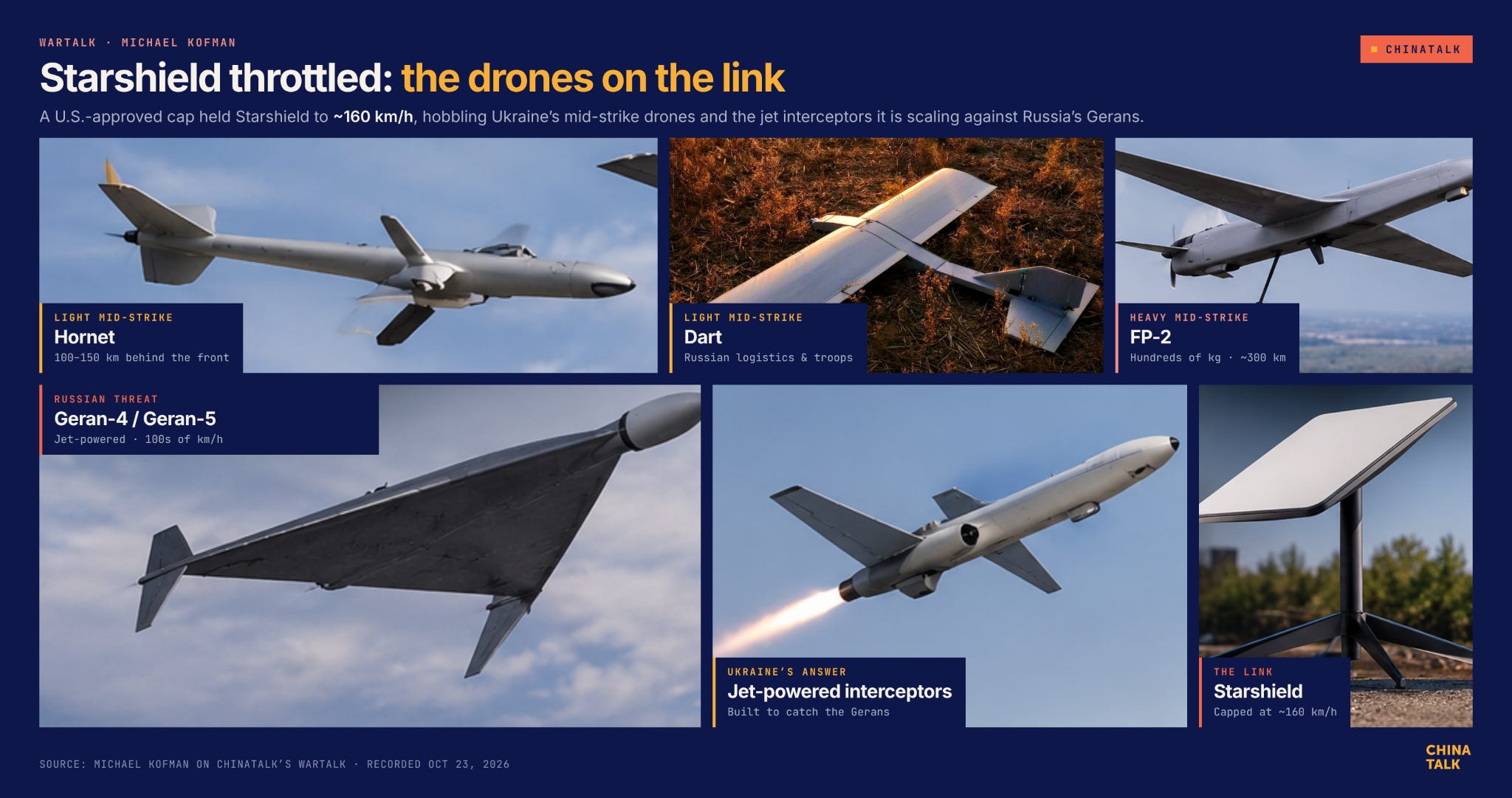
Ukrainian forces use Starshield for what they call mid-strike: long-range strike drones operating 50 to 300 kilometers deep. There are two groups. Light mid-strike — Hornets, Darts, typically with around 10-kilogram payloads — targets Russian logistics and troops, normally 100 to 150 kilometers deep. Then, there’s heavy mid-strike, which consists of big drones like the FP-2, with payloads in the hundreds of kilograms, operating out to 300 kilometers against command-and-control nodes and other larger targets.
What happened is a throttle to 100 miles per hour. The first night it barely worked at half that, so almost nobody could fly. Eventually it started operating at upwards of 80 miles per hour, then became unstable between 80 and 100. Lots of units began losing drones because connectivity was inconsistent.
That has created three big problems. First, drones have to fly below a speed limit that is itself inconsistent — nominally around 160 km/h, but unstable as low as 130. Flying that slowly, many get shot down by Russian interceptor drones.
Second, some of the heavy drones simply can’t fly that slowly; they aren’t designed to. Just because somebody woke up and decided to cap the data connectivity Ukraine needs to directly control these drones at 160 km/h doesn’t mean the drones can operate at that speed.
Third, Ukraine has been scaling production of jet-powered interceptor drones. Russia’s jet-powered strike drones, the Geran-4 and Geran-5, are basically ground-launched cruise missiles. Their altitude and velocity price out traditional interceptors: they come in at roughly six to eight kilometers of altitude and several hundred kilometers per hour. Ukraine has mostly intercepted them with F-16s and traditional air defense, which isn’t sustainable, so it has been scaling up a new jet-powered interceptor. Those also run through Starshield.
Bottom line: the throttle has hampered both types of mid-strike, Ukraine’s effort to control operational depth, and its ability to scale up jet-powered interceptors. Yesterday there was a sense that something had changed and some units could fly faster, but in general a throttle still seems to be in place. Connectivity drops out a lot. That’s the worst part: it’s one thing to be told the speed limit, another when the limit isn’t what they said, you don’t know what it is, and you lose the platform mid-strike because the connection dropped.
Remember, these drones are dynamically flown and targeted, typically over Ukrainian territory and surrounding areas like the Black Sea. They aren’t autonomous. I’d say 99% of systems in Ukraine are at best semi-autonomous, and usually remotely operated. That’s why Starshield matters.
Jordan Schneider: Before we get to the fallout, can we get some strategic context on why this is happening in the first place?
Michael Kofman: Speculation is rife. The Wall Street Journal ran two days of stories on this. Trump has clearly been frustrated with Zelensky and has been trying to get him to stop striking Russian refineries — that’s been the story for the past two weeks. That blew up into a spat because the United States signed this ridiculous deal to import tiny volumes of Russian diesel. I think the total amounts to about one day’s worth of U.S. consumption — which is super useful, and I’m being sarcastic, considering we’re a major exporter of these products and don’t need to import them from Russia to begin with.
As the Journal covered it, Elon Musk may have pitched the throttle to the administration, they approved it, and Starshield got throttled. Ukrainians received official notice with no explanation. Everyone involved in working on this issue got blindsided, and they’ve been trying to get it fixed since. The latest story is that Trump may have talked to Musk about removing the limit — I’m just repeating what I’ve read. Hopefully it gets fixed soon, because the United States is now actively hampering Ukraine’s ability to conduct military operations in very important areas, and it’s not clear why.
Jordan, to get ahead of your follow-up: it’s not clear to Ukrainians what we actually want them to do to get the throttle removed. I’m not trying to dodge the question — it’s not even clear to me why we did this or what we specifically want.
Tony Stark: On overreliance on Starlink and Starshield: resilient low-Earth-orbit communications have been a military-technical revolution, perhaps one of the fastest and most widely deployed ever. At the same time, it’s becoming clear to everyone that, one, having a single supplier is bad, and two, the enemy will eventually figure out how to jam, disrupt, and deny it.
Even from a “what do we want” perspective, this doesn’t make sense for Elon. SpaceX’s IPO touts massive global market share. Well, I’m pretty sure they just tanked it, because everyone’s gonna build their own competitor now. If I were a shareholder, I’d be considerably worried.
Jordan Schneider: Clearly this was a phone call between Elon and Trump. Maybe there’s some ambiguity, but the only reason this happens is because it’s a “working towards the Führer” type of deal — Elon is doing this because he thinks it helps the administration win an election, or because it’s something they want. We can have the blame game afterwards, because it’s really ugly and noxious.
How Much Leverage Does America Have Left?
Jordan Schneider: Taking a step back: if Trump gets even crankier and pulls everything the U.S. can, how bad does it get for Ukraine over the coming months? Are the Russians in Kyiv by Easter? How much leverage does the U.S. actually still have?
Michael Kofman: We still have quite a bit of leverage. Pulling back wouldn’t lead to a sudden collapse of Ukraine’s war effort. But we have to be clear what we mean by “pull back.”
On Tony’s point: Starlink has been one of the critical enabling technologies of this war. Without it, it’s hard to see how Ukrainian units would have cheap, expendable communications to connect drones and UGVs. Other communications solutions exist, but they’re quite expensive. The rapid proliferation of many thousands of Starlink terminals across Ukraine has been essential. Starshield is a small but important subset, because it’s used in very specific strike roles.
So it depends on what we do. Cutting Ukraine off from Starshield, or telling SpaceX to cut them off from the technology, would be disastrous. Beyond that, we’re still a key provider of all forms of intelligence support, munitions, and air and missile defense interceptors. Yes, Europeans are paying, but it’s our choice to send it, and we can stop tomorrow. There are several stories of Hegseth dragging his feet on signing over the latest shipment of PAC-3 interceptors.
The threats of cutting off intelligence and cutting off military supply through the Prioritised Ukraine Requirements List (PURL) arrangement have usually gone in tandem; it’s hard to see one without the other. That would substantially hamper Ukraine’s war effort. Ukraine wouldn’t be in dire straits on the ground, because the Russian military is doing really badly this year — its worst ground performance since the winter of 2023. But air and missile defense is an important part of this war, and given the current situation there, Ukraine is entering a very difficult and uncertain winter.
It wouldn’t collapse the front line, but it alone would change Russian expectations about the war. If your goal is to compel Russia to shift its negotiating position toward acceptable terms for a ceasefire, you won’t get there, because you’re telling your adversary it’s a matter of time. If Ukraine has been cut off from U.S. intel and military support, all Russia has to do is wait — in a war of attrition and exhaustion, time is on its side. You’d be killing whatever leverage you have.
Jordan Schneider: Michael, is this the biggest independent variable over the next two years? Whether Trump goes full King Lear, keeps waffling as he has, or — I don’t know — the ghost of Lindsey Graham inhabits him, and he chases his Nobel Prize by putting pressure on Putin in the final two years of his administration?

Michael Kofman: I don’t want to speak ill of the dead, but I’m not sure how effective Lindsey Graham ever really was, even in his heyday.
Yes, U.S. policy is probably the biggest independent variable overall. But Europe is one too, because major elections are coming in the spring. Ukraine’s war effort now depends heavily on European capital and military support, and if Le Pen or others like her win in France, it’s not clear where policy goes.
On our side, it’s not just support for Ukraine, which has been fairly steady over the past year and a half, with some crises in between. It’s that you don’t know what else we’re going to do, or what war we’re going to start. The U.S.–Iran war definitely affected this war. You don’t know what policies this administration will pursue toward our allies. Back in January, Europeans were genuinely uncertain about our intentions toward Greenland and Denmark — the nicest way I can put it is that we were being very weird. Those policies affect the course of the war too, because other wars won’t wait for yours to finish — especially if the United States is starting them.
Justin McIntosh: In Arms and Influence, Thomas Schelling argues that one of the most powerful things you can do to influence an adversary is to put your back against the wall — make it clear there’s no retreat, so that if they cross a line, they’ll be in conflict with you. Over the past year, the U.S. has continually given itself ways out of its alliances and partnerships, and we’ve blamed allies and partners in significant ways. That makes us unpredictable, and it lets us give in to our worst nature, which is not wanting to be involved in a conflict.
So you get Trump at the Trump–Xi summit saying Taiwan is a really long way away. You get the president saying Zelensky could have ended this war a long time ago — when the only way Zelensky could end it was by capitulating, because he didn’t start it. What terms does the United States actually want?
We had the same question with Iran. The theory seemed to be that if we took out the top 20% of the leadership, they’d capitulate and we’d win. That didn’t happen. So what’s the best available outcome now? That’s where we are with Ukraine. I don’t know that the administration has a fully fleshed-out view of the best outcome for the United States, or for the world. It’s hard to see how this plays out, because it seems capricious and subject to the whims of the administration.
Michael Kofman: Their defining approach is transactional, which is a big problem for alliances and for coalitions engaged in a military effort. Second, the people leading the negotiations — Steve Witkoff and Jared Kushner — are principally business elites. As best I can tell, they’re not approaching this as diplomacy and statecraft but as a business deal. They see settling the war as a transaction standing in the way of other business deals they want to pursue — unfortunately, many of them with Russia.
As for the actual outcome for Ukraine, these folks don’t care all that much. That’s the big problem for Ukrainians and Europeans. Ukraine isn’t interested in a deal that’s just a piece of paper with “ceasefire” written on it. That would leave Ukraine very vulnerable. The Russians will break the ceasefire, as they have before, and renew the war under more favorable conditions, while the Trump administration walks away saying, “We made a deal. Now we can pursue other business deals with Russia.”
A year later, Russia restarts the war. Ukraine will have been forced to demobilize — once peace is made, people naturally want to go home — and you get a continuation war. This war is already a continuation of the 2014 war. We got here through two failed ceasefires, and a third ceasefire could very likely take you to a third iteration.
They also don’t care about the implications for Europe, which is why Europeans aren’t on board with parts of this approach. They understand that people who just want a deal — regardless of whether it ends the war or what it means for Ukraine or Europe — aren’t thinking strategically and don’t have Europe’s interests at heart. It’s hard to even say what the Trump administration’s European policy is. Someone described it last year as less a policy and more an attitude toward Europe.
Tony Stark: Parts of the West are acting exhausted on Ukraine’s behalf because it suits their interests — both the “peace at all costs” crowd and the “this is an economic inconvenience” crowd. They’re acting more exhausted than the Ukrainians fighting on the front lines.
On European frustration with the war: how has the Russian sabotage campaign affected European politics? Has it ramped up enough to change things? And how is it affecting production in the strategic rear?
Michael Kofman: I don’t think Europeans have reacted all that much to the Russian sabotage campaign. People are aware of it, but it isn’t really shaping European politics. There’s an active debate about what’s driving European defense investment: a reassessment of the Russian threat, or fear of abandonment by a transactional United States? Either way, we’ve seen a substantial increase in European defense spending and contracting — something like a 170% increase in contract value over the past several years.
I’ve seen European initiatives responding to Russian actions, but many Europeans understand that some of this activity is Russia trying to sabotage European support for Ukraine and intimidate European countries.
The big question for me is the U.S.–Europe conversation, with the U.S. pushing the idea of a “NATO 3.0.” The administration is trying to shift the burden of conventional deterrence and defense in Europe onto Europeans. But for decades the bargain has been — and this is a feature of the transatlantic relationship, not a bug — that the U.S. plays a central leadership role. NATO’s regional defense plans assume the United States provides much of the command and control and the enablers for large-scale force employment in Europe.
Ideally, someone who isn’t European provides that. Right now nobody in Europe can, and Europe is still very far from being able to, whatever its aspirations. If not the United States, who does everyone integrate around? Who has the ability to employ force at scale in complex operations? There isn’t anyone.
The U.S. has played this role because it’s mutually beneficial — great for Europeans, great for us. As much as things have changed, I don’t see that fundamentally changing, even if U.S. officials are pushing the balance of expenditures onto Europe. The basic question is how much of conventional deterrence and defense Europeans can actually take over, given that their ability to employ force at scale depends on the role the U.S. currently plays.
Justin McIntosh: I’ve thought about this a lot. When allies are asked to replace existing U.S. capabilities with their own production, the two parts can add up to less capability. Instead of complementing each other, you get two systems basically in competition. We’ve discussed this with Australia: building a defense industry that mimics a smaller version of America’s wouldn’t be a good use of Australian defense dollars. Australia should ask what it can add to the existing U.S. force posture in the Pacific.
So how does European defense spending change if the threat is U.S. abandonment versus Russian aggression?
Michael Kofman: Right — and are those different threats? Or is it “I’m worried about U.S. abandonment in the event of future Russian aggression”? Southern European states are very concerned about migration, but what is the in-theater military contingency Europeans should peg requirements to?
Part of the spending increase has been driven by the war itself: Europeans expended a lot of stocks and had to bring artillery and munitions production online. Part reflects a general recognition of the need to rearm, because for years Europeans barely bought ammunition for many parts of their forces. Ideally, one of the best things to come out of all this is substantial European rearmament, with significant investment in artillery, protected mobility, and air power.
But here we run into the issue you just pointed to. Countries want to spend money on their own defense industries, so they often buy not what they need but what they can make at home. Europe has a lot of redundant defense enterprises — many types of artillery, many types of protected mobility. You could easily optimize by pooling and focusing on a couple of platforms. You sometimes see that in air power and in major land systems, like the many variants of the Leopard 2 tank. But overall there’s a lot of diversity, because there are many small defense industries all spending on their own production. Building a smaller version of the U.S. defense sector isn’t very efficient.
Last point. Every time the United States says “spend more,” Europeans say, “You just want us to buy your stuff.” Then people in the U.S. say, “Your defense industry is anemic and can’t absorb the funding — it’s not our fault you lack production capacity.” Now European capacity is growing, and the irony is that we’re the problem. Europeans trying to buy from us are hearing, “Actually, we can’t deliver what we promised. Sorry you bought ATACMS, but I don’t have missiles for you for many years, and I don’t have a clear timeline.” Europeans are spending enough that they’re willing to buy more American — the backlog for some of our systems is extensive — but they aren’t sure how reliably we’ll deliver what they’re willing to pay for.
Who Will Fight With the Drones?
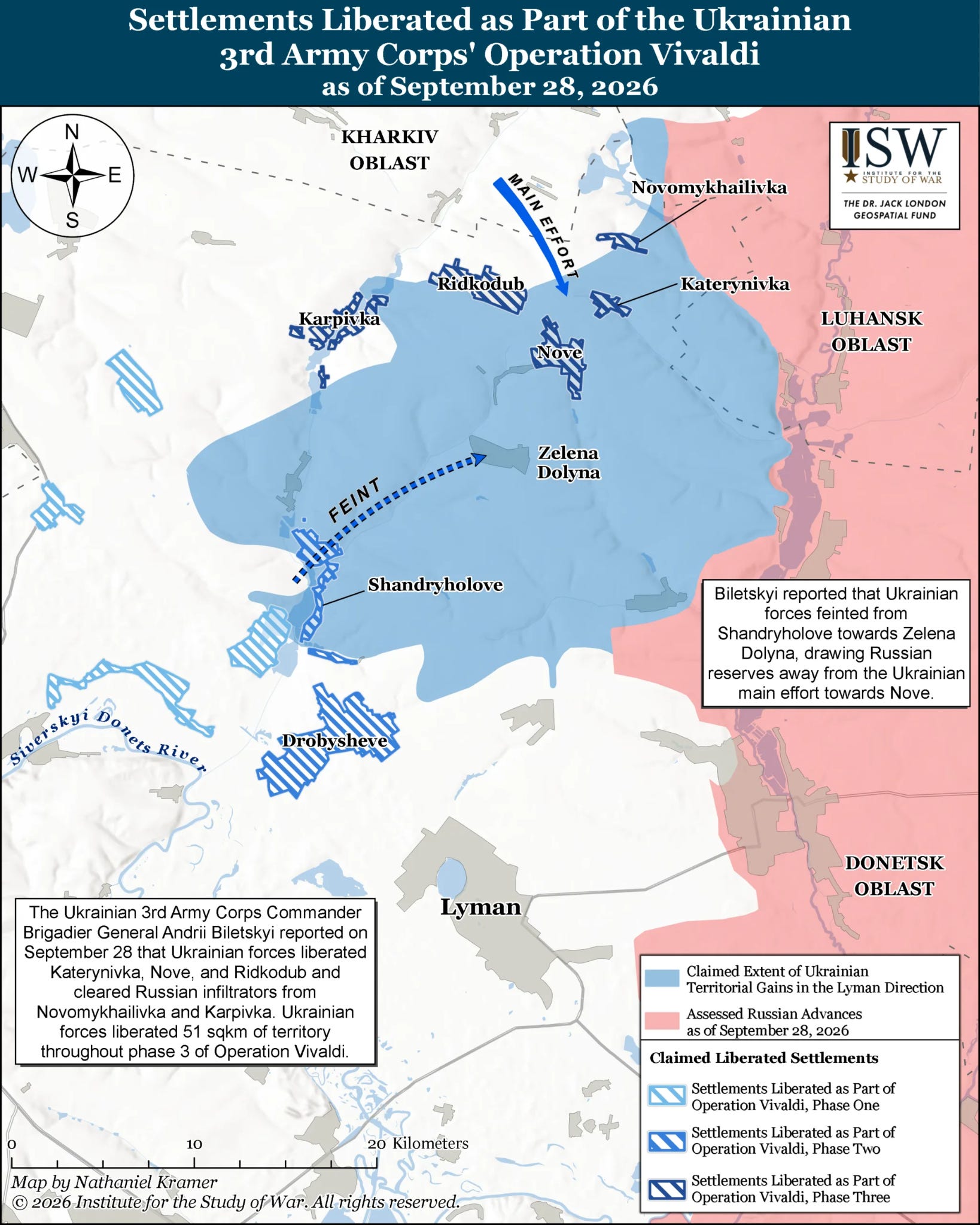
Tony Stark: Pivoting to force modernization. Sometimes people overindex on Ukraine. But for Europe, the alternative contingency is basically the Arctic, which is mostly about hunting Russian subs. If you’re talking land power, you’re indexing off Ukraine — Operation Vivaldi, for example, used mechanized forces in a way consistent with how FPV drones have evolved. How much is Europe indexing off what it sees on the battlefield, versus just trying to replace what the U.S. was supplying?
Michael Kofman: On drones, EW, and similar systems, Europeans are looking at the advent of mass precision — a further evolution of precision strike — and trying to draw lessons from the war. They have to. Whatever you think about generalizing from Russia–Ukraine to other contingencies, Europe’s potential future fight is with Russia, and Russia already fights this way.
So one variable is already solved. Does Russia employ mass precision? Has it shifted substantial manpower from traditional maneuver formations into drone formations? Has it improved its reconnaissance-fire and reconnaissance-strike capabilities? Is it fielding new deep-strike capabilities — light cruise missiles and large numbers of one-way attack drones alongside traditional ballistic and cruise missiles? The answer is yes.
Europeans already know how the adversary will fight. The question is how they will fight, and how to integrate these new capabilities with their forces’ traditional advantages. The big issue — and we run into it in the United States too — is that it’s not just about buying technology. You have to make real choices about force structure and organizational capacity, and nobody wants to make them. They want to buy drones, but they can’t explain who’s going to be fighting with these drones.
In military forces, if you want to add something, you have to figure out what to delete. As soon as you start that conversation, everybody says, “Don’t delete me — my mission is still necessary.”
Take our own force. People talk extensively about procuring drones and adding them to our traditional advantages. Many in the Army say we’re overindexing on FPVs. Fine, not FPVs — there are all sorts of other drone types. The bottom line is that if you don’t have drone platoons and drone companies, nobody in your force is going to fight with drones. Who will employ these capabilities? Who will train with them? Who knows how to do logistics for them?
This requires force structure modifications, real force design choices, and investment in organizational capacity. A lot of the drone conversation is really a more boring conversation about the data layer, connectivity, how you run and operate all this, and the logistics of supporting a drone component of the force.
Lastly, for Europeans and for us, a big question from this war is air power adaptation. Our militaries invest heavily in air power on the logic that a real advantage lets you achieve at least localized air superiority — a great combination of mobility and firepower that enables the ground force to do what it wants. But could we see a future where air power attains localized air superiority, yet the enemy, through dispersed drone units, retains fire control over enough terrain to attrit your ground forces at an unacceptable rate? Air power reports localized air superiority, but it hasn’t delivered the effects it traditionally delivered for ground forces. That’s part one.
Part two: air power needs to adapt to the challenges we see in this war. Western militaries have a big deficit in ground-based air defense because they assume air power has the air defense mission covered. Ask a typical air force whether it has that mission covered against 800 drones in one sortie, plus cruise missiles and other capabilities. The answer is no. It may be adaptable, but those are investments you’ll have to make.
This should be an open-ended conversation, with more uncertainty about whether air power can reliably deliver these things. We need exercises, war games, and debate. I don’t think we’re overindexed on Ukraine. It’s the large-scale conventional war we have to work with, and it has land, air, and sea dimensions. All wars are different and have their own context, true. But if you don’t index off this war, what war do you want to index off?
Justin McIntosh: I want to dig into force makeup. The Army just announced — what the headline summed up as “one rifle squad out, one drone squad in.” Every infantry platoon will now have a drone squad.
I tend to agree with you that the right answer isn’t integrating drones that deeply into line infantry companies. You run into issues with training, manning, and the logistics package. But looking at how Ukrainians fight, what should the ideal force structure look like for U.S. or European armies? You also don’t want an exquisite capability we have to request as an enabler, because Army commanders have historically been terrible at employing enablers. Where do we fuse long-range fires into the infantry squad or company without destroying those units’ logistical back end?
Michael Kofman: I’d start with a drone platoon per maneuver battalion and maybe a drone company per brigade, plus at least a separate UGV platoon, because UGVs require specialization, technical knowledge, and a whole separate logistical pipeline. A platoon per battalion can split into supporting elements and have its own logistics component.
The squad is a separate conversation. In Operation Vivaldi, which you brought up, the 3rd Army Corps had one soldier in every squad act as a drone trooper, providing very short-range tactical precision strike. That’s pretty great. He can come with several drones, throw on goggles, and immediately give the squad a top-down view of the battlefield and support on the spot. Because his antenna is so close to the drone he just launched, he’s very hard to jam.
I’m not saying we should go that direction, but some part of the force should experiment with it. Get the SOF guys — they’re flexible and agile — and make them try the drone-trooper thing. I’m half-joking, but that’s usually how it works: you take someone like that and say, “Why don’t you try this and see if it works?”
But definitely start with platoons and companies. If that works, build out to something like a full drone battalion in a brigade combat team. If not, maybe the brigade has a company and there’s a separate drone battalion as an enabler above the brigade — worst case, something the division commander has. I’d like it to be bigger, but my view is to start at the beginning. Once we’ve made sense of platoons and companies, move to higher-level formations.
I’m a contributing editor at War on the Rocks, so I’ve seen plenty of articles saying, “We need to create a drone force.”
Justin McIntosh: We won’t hold that against you. I promise.
Michael Kofman: And I’m like, we don’t have drone platoons — what are you talking about with a drone force? Or “we need drone regiments.” Do you have any idea how to operate anything drone-related? Start at lower echelons and let commanders experiment. You need to learn to walk before you can fly, and right now we’re barely at the crawl phase.
Then get the enablers right. You need software for situational awareness in the unit. You need organizational capacity: somebody in charge of drones sitting next to the people handling artillery and EW. Drones are also very good for air defense and logistics. They spend a lot of time on offensive and defensive mining and last-mile logistics. They can do CASEVAC and all sorts of things. Get these people working together and they can figure out how to evolve this part of the force. Unless we do that, the whole drone procurement conversation comes down to this: we’re procuring drones for who in the force, to do what with?
Justin McIntosh: One of the big struggles in conceptualizing this goes back to my last couple of years in the military, with LSCO (Large-Scale Combat Operations) — large-scale combat operations — multi-domain operations, and how we’d employ joint fires in support of units. The Army produced a graphic showing the size of an element on the left, and on the right how far past the FLOT — the forward line of own troops — that element was expected to reach into enemy-controlled territory. A squad or company was about one kilometer. A battalion was five to ten kilometers. As you scaled up to corps and armies, you got to 20 or 30-plus kilometers.
One issue our doctrine and our commanders are running into is that we’re starting to field capabilities at the company level that would let a captain reach 20, 30, 40 kilometers into enemy territory. That has been conceptualized as a strategic capability. It’s hard for commanders to wrap their heads around the fact that it’s still a tactical fight — still tactical maneuver space that we need to let the tactical problem-solvers own. It doesn’t need to be handled at the corps level by a three-star staff.
Tony Stark: Part of the problem is that we’re trying to build doctrine that fits well on PowerPoint, more than doctrine that works in the force. Staff officers are lazy, and as I constantly lament, the quality of staff officers has gone down a lot.
More importantly, we’ve traditionally set the depth a unit can maneuver or strike based on artillery — the indirect fire effects available at that echelon — and, for a squad, line of sight. As Justin said, it’s different now. The readout from 3-1 Cav’s senior staff on their rotation in Germany — how they learned to shift fire control measures to coordinate fires deeper — is a good step forward. But you have to do a lot of that over years to see how the moving pieces fit together.
Michael Kofman: First, in the Russia–Ukraine war, mass precision means you need a clear plan for setting the conditions for any offensive ground operation. You have to think through how you’ll suppress enemy drone units and penetrate far enough, fast enough, to displace them. If you haven’t displaced them, there’s no way to sustain the offensive. Your force won’t control anything on the ground through its presence. It’ll be hiding, trying to survive, with little prospect of logistical sustainment. The enemy will close the corridor behind you, and your offensive will slow to a crawl. You need to breach some minimum number of kilometers in that initial thrust and suppress or displace the enemy drone units.
Today, light ISR and Mavic operators sit about three to five kilometers from the zero line. FPV operators sit eight to twelve kilometers back, depending on what they’re using. Heavy multirotor and fixed-wing ISR operators are further back, at 15 to 25. So ideally you need to advance at least 10 to 15 kilometers to displace the supporting enemy drone units.
That’s typically where artillery sits too, around 10 to 12 kilometers — and only that close because Ukrainians lack long-range rounds. A large percentage of the artillery we supply them has only about 15 kilometers of range, which is part of why artillery isn’t used as much in this war. Not many people know that. Artillery still shapes the battlefield decisively — because it’s there, it prevents force concentration. But when the drone employment zone runs 15 to 25 kilometers deep, stacked mostly around 10 to 15, and you give artillery crews 15-kilometer rounds and charges, you’ve artificially created a big problem for them.
Next, tactical versus operational. To me, 15 to 30 kilometers is still very tactical. Believe it or not, in Russia–Ukraine most drone battalion operators can now strike 50 to 70 kilometers out, and many drone battalion commanders in regiments can strike up to 300 kilometers.
That has created coordination problems, because precision strike has democratized and proliferated across the force. I do fieldwork in Ukraine pretty regularly, and units show me the strikes they’re doing in their lane in support of their brigade. The brigade is striking 70-plus kilometers deep, and higher-echelon formations supporting the corps in that sector go all the way to 300. Some of the strikes made me ask, “Why are you hitting those targets?” The answer: “Well, we have the means. Why not? Nobody told us not to.”
When long-range strike proliferates across a force very rapidly, units take initiative because it seems like the right thing to do: “I’m blowing up these bridges, we’re doing interdiction.” The force gets these capabilities and starts doing what it always wanted to do. You have to corral that. And for our force, 15 to 30 kilometers isn’t really operational-level strike. Even basic FPVs now have pretty long range. You should expect very low echelons to have this kind of precision strike capability.
No One Owns the Night
Michael Kofman: Last point: Vivaldi shows that tactical surprise in the traditional sense is very hard in a pervasive ISR environment, and nighttime operations no longer give the force an advantage. A guy who spent $3,500 on a Mavic 3T — pound for pound the most-used drone of this war — can see your entire force on thermal miles before you reach your own FLOT (Forward Line of Own Troops). You don’t own the night. This guy with this Mavic can see everything.
Justin McIntosh: The 160th is going to be very upset with you for saying that.
Michael Kofman: I’m sorry, but it’s 2026. I’m not saying you shouldn’t invest in nighttime capability — it’s still important. You just need different expectations about the advantage it gives you.

Tactical surprise is hard in the traditional sense, but operational surprise is still very much viable. It requires making deception a big part of how you plan the maneuver, and setting the conditions correctly. Even though in theory everyone can see everything, you can deny them that ability for the duration of an operation. In Operation Vivaldi, the Russians proved cooperative — but the Ukrainians did things that made them cooperative. They ran the operation a certain way, and it’s not the first time I’ve seen that in this war.
It shows there’s still space for mobility and maneuver on the battlefield. Although, as you know, the pedantic debate in our military always continues: is it really maneuver? Or, as I joke, is it just sparkling mobility? Because it’s only maneuver if it comes from the Maneuver region of France. How do we know it when we see it?
Justin McIntosh: I’m in several veteran and active-duty group chats where there’s been exactly that back-and-forth — “It’s not really maneuver, it’s just…”
Jordan Schneider: Unless you encircle 200,000 Soviet troops in 1941, it’s not maneuver, okay? Let’s be clear.
Justin McIntosh: Exactly. But that’s a great point. One underreported aspect of Ukraine’s success across multiple operations has been its use of deception, which is something the United States struggles with. One of the psychological operations groups just got stood down. We’ve struggled a lot with military deception.
Jordan Schneider: But Justin, they flew the bomber to the left and everyone thought it was going left, but it went right! What do you mean?
Justin McIntosh: Exactly. That’s our great military deception of 2026 — the B-2s.
Michael Kofman: I remember. It deceived all the OSINT guys tracking it. But briefly: one thing you can see in the Iran war is that there’s no culture of decoys. Decoys are one of the most important things in the Russia–Ukraine war.
Justin McIntosh: That’s absolutely right.
Michael Kofman: There’s no culture of decoys. The U.S. military will take a $500 million asset that’s hard to replace and just put it out there, visible in commercial satellite imagery, with no effort to mask it and no decoys.
Tony Stark: That’s not lethal, Michael.
Jordan Schneider: Michael, one theme of your research over the past few years is that Russia needs to get punched in the face before it figures something out. The helicopters need to get blown up, the bombers need to get blown up — something has to happen in a way so freaking obvious that they can’t cover it up. Is there any hope for us as a nation to learn these lessons? It’s 2026. This war has been going for nearly five years.
Justin McIntosh: The problem is we’ve forgotten most of them. To Michael’s earlier point, we’ve had air superiority and space superiority for so long that it didn’t matter. We didn’t have to think about protecting assets in safe areas, because once we got to a safe area, we owned everything.
Both of my grandfathers served in Vietnam — one a Green Beret, one a logistics guy. The logistics guy told me about a strategic bomber landing at his base. When the sun went down, he immediately had to drive out, hook up to the bomber, and drag it to a new spot on the airfield, because as soon as the lights went out, mortars started landing where that plane had been. They knew they needed deception, rapid movement, asset protection. We’ve lost that because we got so used to owning the night and owning the airspace. I think we can get back to it. Hopefully we don’t have to get punched in the face more than we already have.
Michael Kofman: The first thing I’d take away is the need for hardening and passive protection. Second, point defense. It saddens me that we’re only talking about point defense after the losses in the Iran war. We should never have lost people to Shahed-136s. That’s my view. Putting things underground and digging in is really important, doesn’t take much time, and is very cheap. And properly done decoys are still highly effective. This war has shown that, whether you’re decoying long-range precision strike assets, air defense positions, command posts, whatever.
Unfortunately, Jordan, I think we’ll get there in a future fight — when we lose enough high-value assets and people to enemy strikes, see that air and missile defense isn’t enough, and realize that much cheaper investments in decoys and other traditional forms of military deception could have saved the force a lot of harm.
Then there’s how we operate: the challenge of maneuvering, and above all of concentrating and doing logistics. As I’ve seen in the Russia–Ukraine war, you can’t concentrate or do a lot of these things even pretty far from the FLOT. Yes, things get really tough in the last 15 kilometers. But if you concentrate logistics or supporting elements at 30, 40, 50, or 70 kilometers, you can easily catch an SRBM or some other form of precision strike. One-way attack loitering munitions have pretty long range on their own — even basic ones like the Lancet; the Lancet-3M had 80-plus kilometers. You have to be very thoughtful about this.
I’d say the best militaries learn from the mistakes of others. The second-best approach is learning from your own mistakes. Large institutional militaries, sadly, tend to learn only from their own; it’s harder for them to change. That’s just the reality. We’re definitely doing a lot better than the Russians, but we need to be doing a lot better than what I see now.
A brief comment on analysis and indexing on the war. We have to be careful: every war has its own context. Some things are observations, not lessons learned, and not necessarily generalizable. Second, the period of the war matters. The initial period of a conventional war is an intense, dynamic fight where forces and plans collide, and a lot is contingent, including luck and chance. Then come offensives and counteroffensives. If the war continues, it may become a prolonged conventional war defined by positional fighting and attrition.
A common mistake is drawing lessons from the last couple of years of positional war about how the opening of the next war will go. The context at the opening of a war is usually different from one you’ve spent three or four years fighting. Forces change a lot over that time. You have prepared defenses and the traditional problems of structuring an offensive to breach defensive lines, which may not be an issue early on. I offer that as a caveat, and I have to debate it with myself, because the Russia–Ukraine war as we see it now is not how it started. If I showed you the first year and a half, it looks quite different from the last two years.
Jordan Schneider: What’s struck me over the past few months is that even this deep in — close to total war on both sides, with fairly full mobilization — there’s still so much technological and doctrinal exploration to be done. You get something like Operation Vivaldi where, as you discussed with your guests earlier this week, you can achieve positive casualty ratios on the offensive if you’re clever and well-trained enough, with the same number of drones and troops as the other side.
When people say FPVs are the answer — sure, it’s nice to have the toys. But the toys are table stakes. Once both sides have them, it’s everything around them that matters. If you’re good at that and can trick your opponent into screwing up, you can be remarkably effective.
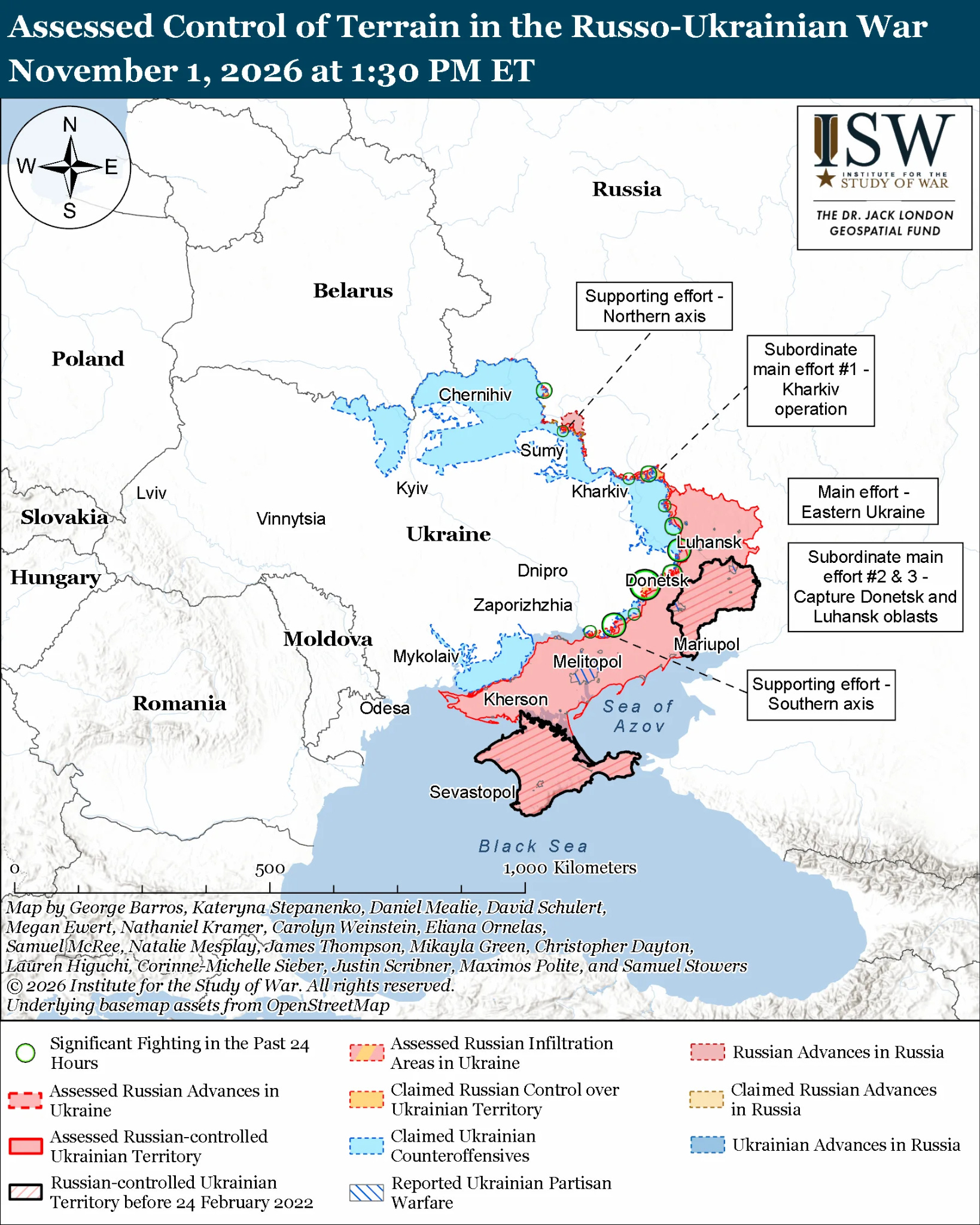
Michael Kofman: In square kilometers, Vivaldi took back more territory in a couple of months than the summer 2023 offensive did. A lot of people who don’t follow the war think there’s a positional stalemate on the ground. In some ways it’s actually a much more dynamic battlefield now than it was in 2024 and 2025. Space has reopened. You see a lack of cohesive defensive lines on both sides, and both sides experimenting with how to take a technology that was first applied to defense and use it for offense.
When people ask whether drones are offense- or defense-dominant, I always say it’s one of the least smart conversations you can get involved in. It’s easiest to apply technology to defense first, and on land, defense is easier than offense. Then that technology usually gets adapted over time, by the same force, to enable offensive operations. Most technologies are offense-defense agnostic. That’s just the way it is.
Vivaldi and other operations — and drone assault units like Code 9.2 — keep experimenting with ways to combine mechanized maneuver and drones. Look at their force structure: roughly equal parts drone units and mechanized assault formations. Neither side accepts the positional dynamic. That’s why we should follow this closely: both sides are still experimenting and trying to evolve out of the positional dynamic they helped establish.
Justin McIntosh: I want to come back to what you said about how far an offensive needs to penetrate to be sustainable, rather than just hiding from the other side’s drones — 10 to 15 kilometers in a single operation to clear the rear area and actually push the enemy back. That reminds me how circular time is. The Ukraine war has gone through many of the same permutations as World War I: an initial maneuver that failed; trench lines that got dug and then spaced out; offensives that stalled because they didn’t go far enough or lost command and control and petered out. Now you’re finally seeing a bit of a return to maneuver as these different capabilities get layered in.
But as you said, that took four years of combat — not counting Crimea — and a whole-of-society effort. Where is the European or U.S. capability to replicate that without the same level of effort? Does it exist?
Michael Kofman: The U.S. point of view is, “This is not how we would fight.” I hear it a lot. It’s the mantra of U.S. forces.
Justin McIntosh: The common refrain. “We’re different.”
Michael Kofman: Really? Tell me how we would fight. It’s true that we wouldn’t fight this way; we’re a very different force. But that doesn’t mean the way we plan to fight has no problems. People say it as though there are none. At the very least, there are interesting questions to ask about how we plan to fight.
We know a couple of things for certain. We have a good sense of how our opponent, Russia, plans to fight — with one big caveat. In Ukraine, Russia is forced to fight in a way optimized for small-scale combat operations, using fire teams and infiltration by individual infantry. That’s not how it would ideally fight; it wants to return to large-scale offensive maneuver. But we have a decent sense of how that force would fight with drones, traditional strike, artillery fires, and long-range precision strike systems, including the newer ones. We can account for that part.
On our end, the question is how much we actually adapt and integrate. We’ve at least gone far enough that most people say we need to protect our formations so they can do the great maneuver stuff. People recognize the challenge and the threat to some extent. But we have a ways to go. I’m a bit worried about how what I’ve seen in Russia–Ukraine interacts with the way we plan to fight.
As I said, a key part of our doctrinal approach is attaining air superiority. Will it deliver the effects for our ground forces that it delivered in previous conflicts, or will we have problems? And mass precision on the battlefield is a phenomenon we really have to account for. If we don’t, the force could face unacceptable levels of attrition.
I use “mass precision” deliberately, because I’m much more interested in force employment than in the attributes of specific capabilities. Others prefer “precise mass” or “affordable mass,” and I think we’re describing different pieces of the same puzzle. But outcomes derive from force employment, and different militaries come up with very different ways to use a technology — the classic examples are the tank and the aircraft carrier.
The military that first deploys a technology usually isn’t the one that comes up with the most interesting adaptations in force structure and operational concepts. When a military first deploys something, it duct-tapes it onto the way it already fights, as a plus-up. Then somebody else comes along and says, “That’s interesting — but it’s much more interesting if you build more of the force around that technology instead of making it an add-on.” From what I see, we’re taking the traditional conservative approach to drones: an add-on we should somehow bolt onto the way we fight.
Sorry if this is an incomplete answer, but for us, lessons learned are a work in progress and an active debate. One last point on why. It’s not only vested interests or the military not liking change. For military folks, the initial lesson from any war is, “Whatever I see here validates the investments I already wanted to make.” That’s the typical first reaction: “Pretty sure whatever I wanted to buy is the right thing.”
Part of the issue is that Russia and Ukraine have been entangled in a three-to-four-month adaptation cycle, and neither has broken out of it to establish a decisive advantage. The U.S. military, like most militaries, is impressionistic. If neither side wins decisively, you’re not sure what you saw is compelling enough. The U.S. military usually needs to see something employed decisively — one side uses it to win, or the weaker force uses it to defend effectively, like Israel in the 1973 Arab–Israeli War. If a bunch of generals don’t get that impression, they’re naturally skeptical.
Wet-Gap Crossings and What to Tell Congress
Tony Stark: On that point, can we talk about wet-gap crossings for a second? Sorry, this is one of my pet issues.
Michael Kofman: I don’t know where that came from, but let’s do it.
Tony Stark: One of the biggest lessons the U.S. Army took from the 2023 offensive is that the way we do wet-gap crossings probably won’t work, given the availability of sensors and firepower. Even though that’s not how Ukraine employed them, the takeaway was that maybe we shouldn’t do it that way either. What lessons have Ukrainians and Russians learned, and how have they adapted since those early days?
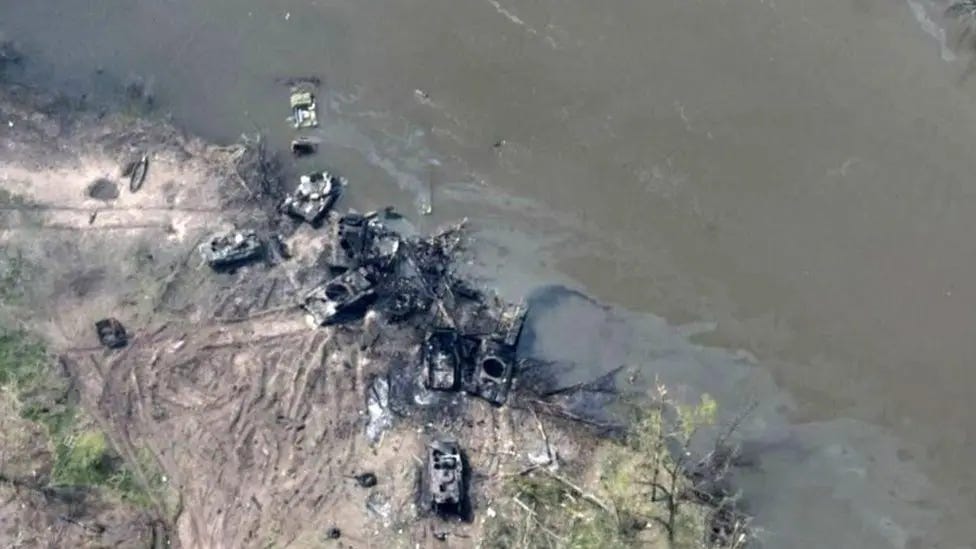
Michael Kofman: First, I’ll tell you what you already know: they’re really hard. Early on, when the Russians in particular struggled with them, there was some really unhelpful commentary from Western military folks posting pictures of perfectly laid-out pontoon bridges in exercises and saying they know how to do wet-gap crossings. It’s ridiculous. Try doing that under fire, against an opponent with long-range precision strike and pervasive ISR. It’s a different story.
My grandfather did two wet-gap crossings in World War II and told me about them. Neither sounded like something you could easily do against a capable opponent, or would elect to do if you had an alternative. It did not sound like fun. And in our militaries, it’s been many years — possibly generations — since anyone has actually done a contested one.
Justin McIntosh: The only thing even close would be the Kurdish push south toward Manbij, which was supported by U.S. special operations forces but wasn’t a U.S.-led operation. And even that was kind of a shit show.
Michael Kofman: Here’s what I’ve seen. One, pontoons still seem to be the way to go, but you have to figure out how to defend them, or keep replacing them. You’ll need a lot of them. Two, ferries and ferry networks work. Early on, the Russian military retrograded from Kherson using one bridge over the Kakhovka Dam and a ferry network, and withdrew quite a few forces. It wasn’t as easy to interdict as people thought.
Next, look at Ukraine’s Krynky operation. We can debate how successful or useful it was, but Ukraine sustained a force in a very narrow lodgment on the other side of a river, primarily with heavy multirotor drones doing its logistics. Since drones can do CASEVAC (casualty evacuation) and logistics, you can now think differently about how you get troops across and support them, and how far you can use fires — essentially mass precision — to isolate the theater of operations and enable a wet-gap crossing. Those are the base requirements: what you’d have to plan for first to get the force across and stably entrenched on the other side.
But I’m not a wet-gap crossing expert. I only know what I’ve seen in the Russia–Ukraine war. All I know is that, judging by Twitter, it seems really easy to the people who observe failed wet-gap crossings. Having never done one themselves, they’re pretty sure they could do it under fire.
Tony Stark: It’s just a river.
Justin McIntosh: A buddy of mine was an Army logistics officer until relatively recently and worked with the engineers for a while. When I asked about the bridging units, he said, “Those things basically never work. They’re always out of commission.”
Tony Stark: The maintenance on them is pretty rough because of the hydraulics. It’s a lot of equipment to maintain for something that’s never used, so it gets neglected — across NATO. 2023 caused a bit of a panic.
Jordan Schneider: For more, subscribe to our nonexistent Patreon for 30 more minutes of Tony on wet-gap crossings.
Michael Kofman: It’s a good topic — it just came out of nowhere. He’s like, “Let’s do wet-gap crossings,” and I’m like, “I’m in.”
Jordan Schneider: Mike, I want to take it up a level from your comment before Tony got us soaked. What do we want to tell Congress from a procurement perspective?
Michael Kofman: Unfortunately, Congress shapes procurement a lot. It’s not just our military — Congress actually shapes a lot of procurement decisions and often tries to insert things into that conversation.
On drones, I’ll go back to what I said earlier: it’s not just about procuring drones. Congress has to get involved with the military to make sure it makes the right choices on force design and organizational capacity, or we won’t get very far with drones. Sometimes it takes Congress to tell the force.
Second, Congress needs to get really involved in airbase hardening, point defense, and making our stand-in force in theater — particularly its air component — more resilient. I just don’t think we should be losing anyone to Shahed-type one-way attack drones. I find that very problematic.
Third, there should be some pretty hard questions about whether the way we plan to fight is still suitable given how our adversaries plan to fight, and whether we’re doing enough investigation. This is obviously a defense research person saying we need more defense research — but we generally do. These are open-ended questions. Maybe our approach is still good, maybe it’s not. I’m not sure.
Tony, briefly — I have a story for you.
Justin McIntosh: Is it about a wet gap?
Michael Kofman: In 2024 I did a wet-gap crossing in the car with the rest of my team. I was taking them across the Oskil River at night to a battalion position in that big lodgment the Ukrainians have southeast of Kupiansk. I’d been in touch with the brigade commander about where the battalion was and whether our vehicle could make it, and something got lost in translation. I didn’t fully understand that we’d have to ford the river in the vehicle — but once we were in the river, it became clear that’s what we were doing that night. We got through. The river was just shallow enough, even with the current, to ford in our car.
That fording point regularly got hit by glide bombs — you could tell. I still remember the dead quiet in the back of the car as we slowly forded our way through. You can’t see what’s underneath, and the crossing had been hit so many times that the car could easily dip into a deep spot or get stuck. I told the team, “Listen, whatever thoughts you have right now, keep them to yourselves, because just so you know, we’re going to have to cross this river again on the way back.”
We did get stuck for about a minute inside the river on the way back, and it was really, really quiet. But it worked out fine. Later, as a joke, I got them a T-shirt with the wagon from The Oregon Trail that said, “Get in, we’re going to cross the river.”

Jordan Schneider: Oh my god. We’re going to get some WarTalk wet-gap crossing merch. We’ll give you the first one, Mike.
Justin McIntosh: That’s one of those moments when the car gets stuck, water’s coming in, and all of a sudden the water gets a little warm because somebody in the back is like, “Nope.” Sorry.
Michael Kofman: I have lots of these, but you got me thinking, and I remembered this one. Sorry for the detour — but this really happened.
Justin McIntosh: I want to go back to the way we approach these problems. The military has a term, DOTMLPF-P — a long-ass acronym where every letter stands for something. The first three are doctrine, organization, and training. People generally list things in order of importance; you don’t put the least important thing at the top. Now they’ve added another P, for policy, and I’d argue we’re getting things backwards by starting with policy. The DOW — the Department of War — sends out a lot of policy memos, but it isn’t doing much of the doctrine, organization, and training work that needs to happen. That gets at where we’re applying our focus and where we actually see change. And as Mike said, realistically, they don’t know what to change.
Michael Kofman: Doctrine is good to talk about, but to me organization and force structure matter most. Force structure is much more revelatory of a military’s preferences, and it will be your de facto strategy in a war. It has a much bigger effect than how you say you’ll fight. Why? If you agree with me — and with Stephen Biddle — that force employment is the key determinant of battlefield outcomes, all else being equal, then what most constrains force employment is the force design choices made before the war and the resulting force structure. That either constrains or opens up your ability to employ the force.
An example: before invading Ukraine, the Russian military made force design trade-offs. It cut the infantry component because it thought infantry wouldn’t be as important, and it didn’t invest in things the force might need for a strategic defensive, because it didn’t expect to be on one. The U.S. Marine Corps said, “We don’t need tanks — we’re cutting armor.” Forces make these choices, and if they turn out to be wrong, it’s very hard to recover. You can’t come back three weeks into a war and say, “Actually, we needed that whole combat arm.” You can’t just bring it back, and you’re badly constrained on force employment.
The British Army, I think, has 14 Swedish Archers as its total artillery component — two for training and 12 for the entire rest of the force. I don’t think I’m exaggerating. I’m not saying they’ve cut artillery entirely, but it’s small enough that it would be barely visible to an opponent.
That’s why force design and organization are such an important part of this conversation. We spend too much time talking about technology and materiel. And it depends on the service: the Navy is very operational, the Air Force is heavily into technology investment, and the Army spends a lot of time talking about doctrine — trying to figure out whether it’s really maneuver or not.
Justin McIntosh: You’re reminding me of the irregular warfare versus unconventional warfare arguments I’d see in Special Forces all the time. It would inevitably be two warrant officers and a colonel arguing over a doctrinal definition, and I’d be like, “Guys, none of this matters. Can we just go do our job, please?”
Michael Kofman: Policy, by the way, is really important. What a lot of people don’t appreciate is that military strategy flows from the political. Political leadership sets the parameters and conditions for military operations, and the concept of operations flows from that. It will never be ideal, and it will never be rational.
Maybe I’ll leave you with this thought. I’ve been an analyst pretty much my entire professional life, and I’ve had the opportunity — and sometimes the burden — of interacting with senior political leaders and decision-makers. They think very differently from military folks and traditional defense planners. We tend to have a rationalized view of war. The political class doesn’t come from our community. They make the decision to go to war, and they bring big assumptions about the operating environment and how the other side will react.
You could easily have an interaction where CENTCOM says one of Iran’s key courses of action will be closing the Strait of Hormuz, and political leadership says, “Don’t worry about it. In and out, 20-minute adventure. We don’t really need to plan for that, because I don’t think it’s going to happen. I think we’ll settle this war in two weeks.” The one thing you’re sure the other side will do, they argue you don’t need to plan for. I’m not saying that’s what happened in the Iran war — even though it looks like that might have been what happened in the planning.
My point is that political leadership will have its own assumptions, independent of what you tell them. As a class of people who think about war, we often don’t spend enough time understanding the people who decide to go to war and set the policy for how it’s prosecuted. We mirror-image ourselves onto that decision-making community. But spend enough time around them, and you’ll see they think very differently. The military balance and traditional, rational defense-planning inputs are only one of the things they consider — often not the biggest one, and often not the one that impresses them most.
Jordan Schneider: On that note — we’re starting a ChinaTalk book club. Our first book is Team Yankee, which I think is the opposite of that. Mike, for our next book, is there something that embodies that lesson of the political-class mindset banging up against military planning — and winning the argument?
Michael Kofman: Before and After the Fall. It’s a collaboration between historians, analysts, and political scientists, and I think one of the last books Nuno Monteiro was involved with before he passed. It’s part of a third wave of literature on the transition at the end of the Cold War and the collapse of the Soviet Union. The first wave argued there was tremendous change in 1989–91 — in international politics, military and nuclear strategy, and economics. This third wave goes back and finds far more continuity than change.
It has some really good contributors: Robert Jervis, Sergey Radchenko, John Ikenberry, Daniel Deudney, and great historians like Fritz Bartel. I’ll concede I have a chapter in it, “Continuity and Change in Russian Grand Strategy.” I don’t think it’s the most exciting one you’ll read, but if you’re a Russia hand, it might interest you. The book isn’t specifically about Russia, though. I found it very useful, and it has a real diversity of contributors. It may not be the kind of book you’d usually pick up — “Great, you suggested an edited volume. Those are only written for master’s students.” But I recommend it.
Jordan Schneider: What a treat. Thank you so much for all the work you’ve done. No one gets rich doing military analysis, but you do get rich in intellectual glory, students, podcasters trying to embarrass you on their own show —
Tony Stark: Friendship.
Justin McIntosh: There’s no attempted embarrassment here.
Jordan Schneider: There are perks, right?
Michael Kofman: Listen, Jordan, the perks are that the further you go in the field, the more people on Twitter will yell at you and try to explain to you the thing you’ve already been working on for the last 20 years. That’s the perk.
Jordan Schneider: It’s the same in the NBA. LeBron’s got a lot of haters, but he’s doing okay.
This was amazing! I know nothing about military matters but learned so much. Thanks for that.
Also, you guys are hilarious. It felt weird to laugh during such a serious & even tragic topic but there I was.
Love to hear more from you.
topic